
Sewage backing up
Sewage coming up in the basement or the lowest drains in the house is the classic sign of a blocked or collapsed main line.
A failed main sewer line means sewage backing up into your basement. We locate the break with a camera, dig it up with our own equipment and replace the line, so one licensed contractor handles diagnosis, excavation, piping, testing and backfill.
These symptoms often point to the main line rather than a single fixture. A camera inspection confirms what is happening underground before any digging begins.
Sewage coming up in the basement or the lowest drains in the house is the classic sign of a blocked or collapsed main line.
When multiple fixtures slow or gurgle together, the problem is usually in the main line, not one branch drain.
If augering or hydro jetting provides only short-term relief, the pipe itself may be broken, collapsed or deteriorated.
Soggy ground or a sunken area along the sewer route can point to a failed section of line.
Keeping excavation and plumbing responsibility together reduces handoffs and gives you one clear point of contact from the first camera inspection to the finished trench.
Milwaukee pipeline camera inspection and electronic locating show where the line is damaged and which way it runs before excavation begins.
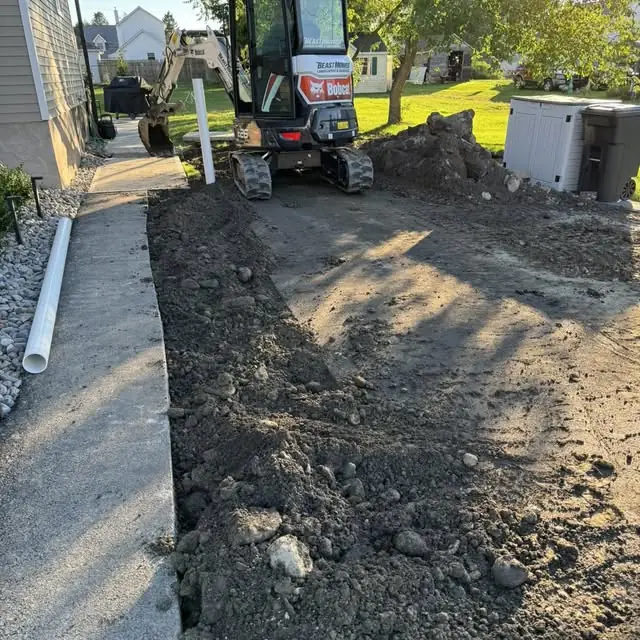
Jerry Riviello, owner and Licensed Master Plumber, operates the compact excavation equipment himself, including in rock and difficult soil.
New sewer piping is installed and connected, with a cleanout added for future access and serviceability where the scope calls for it.
The work is tested, then trench conditions, stone and restoration responsibilities are handled as spelled out in your written estimate.
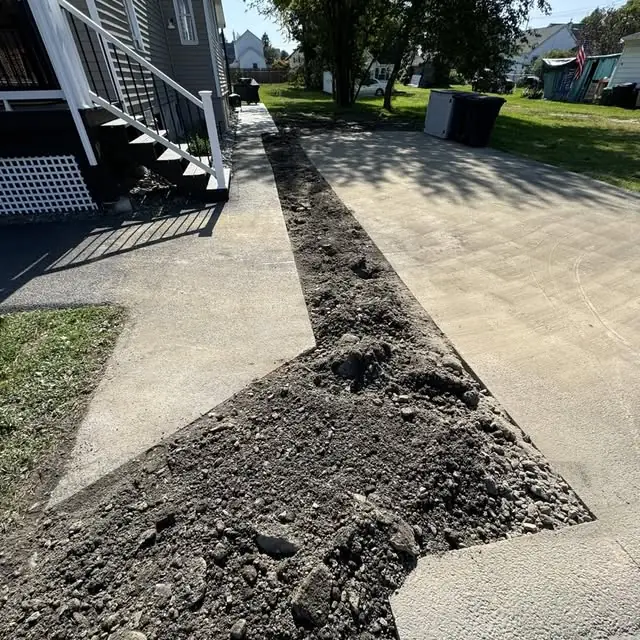
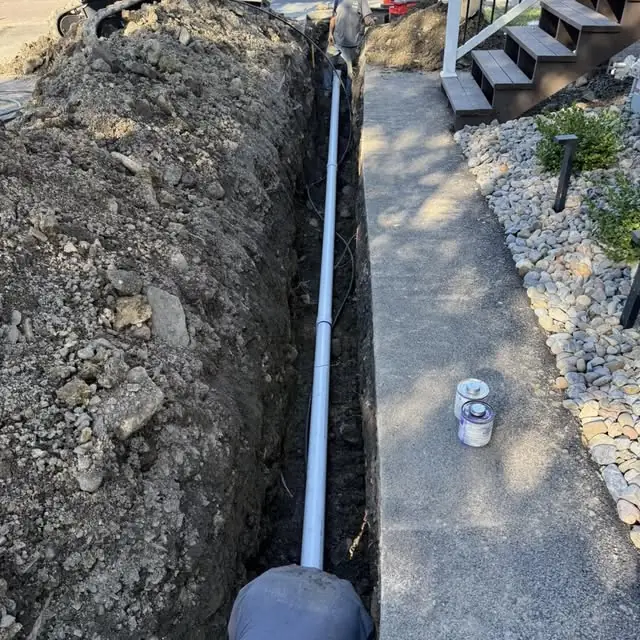
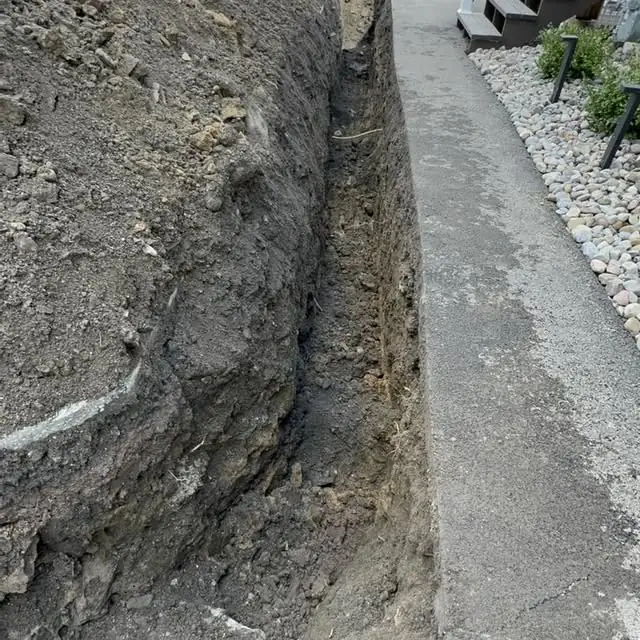
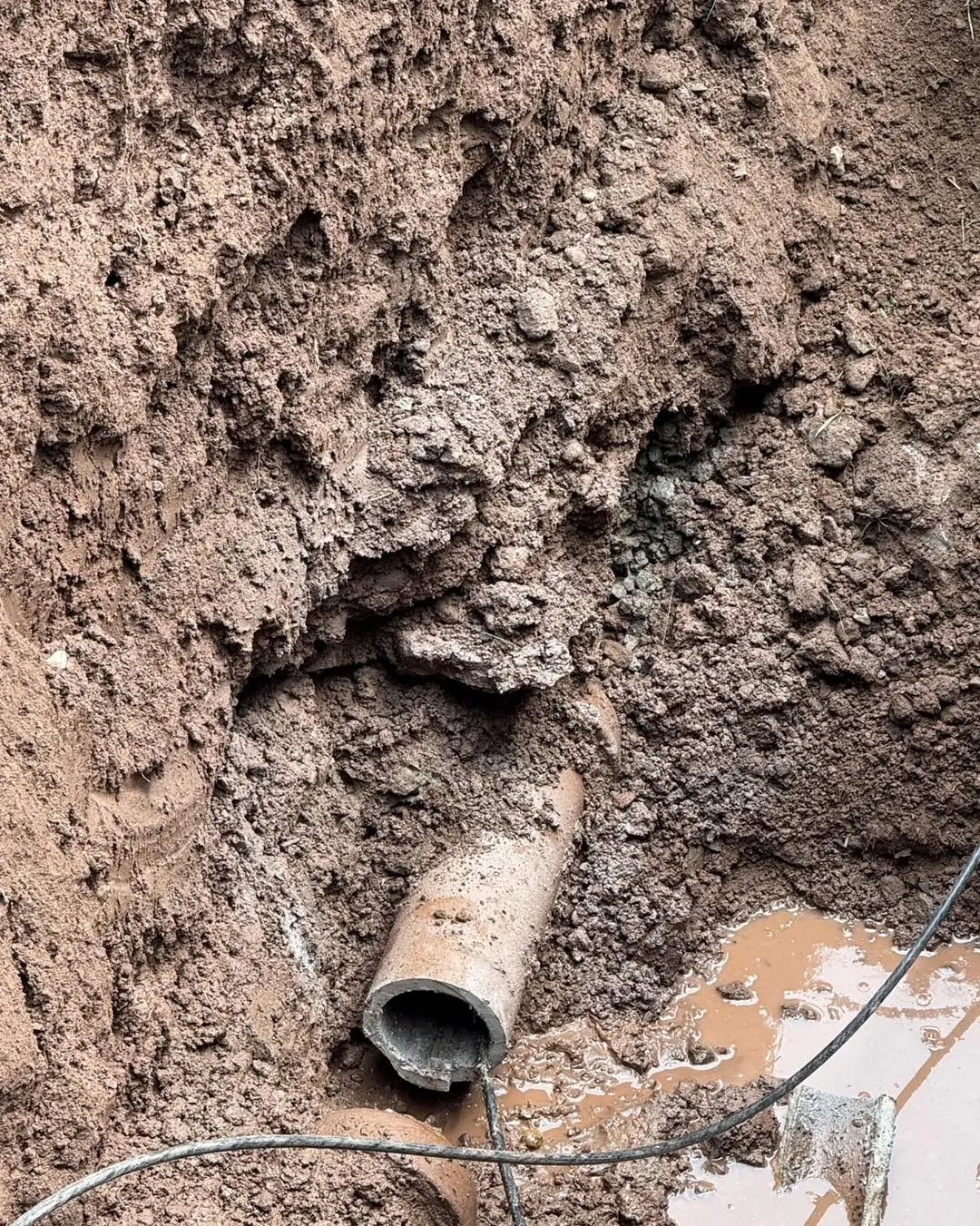
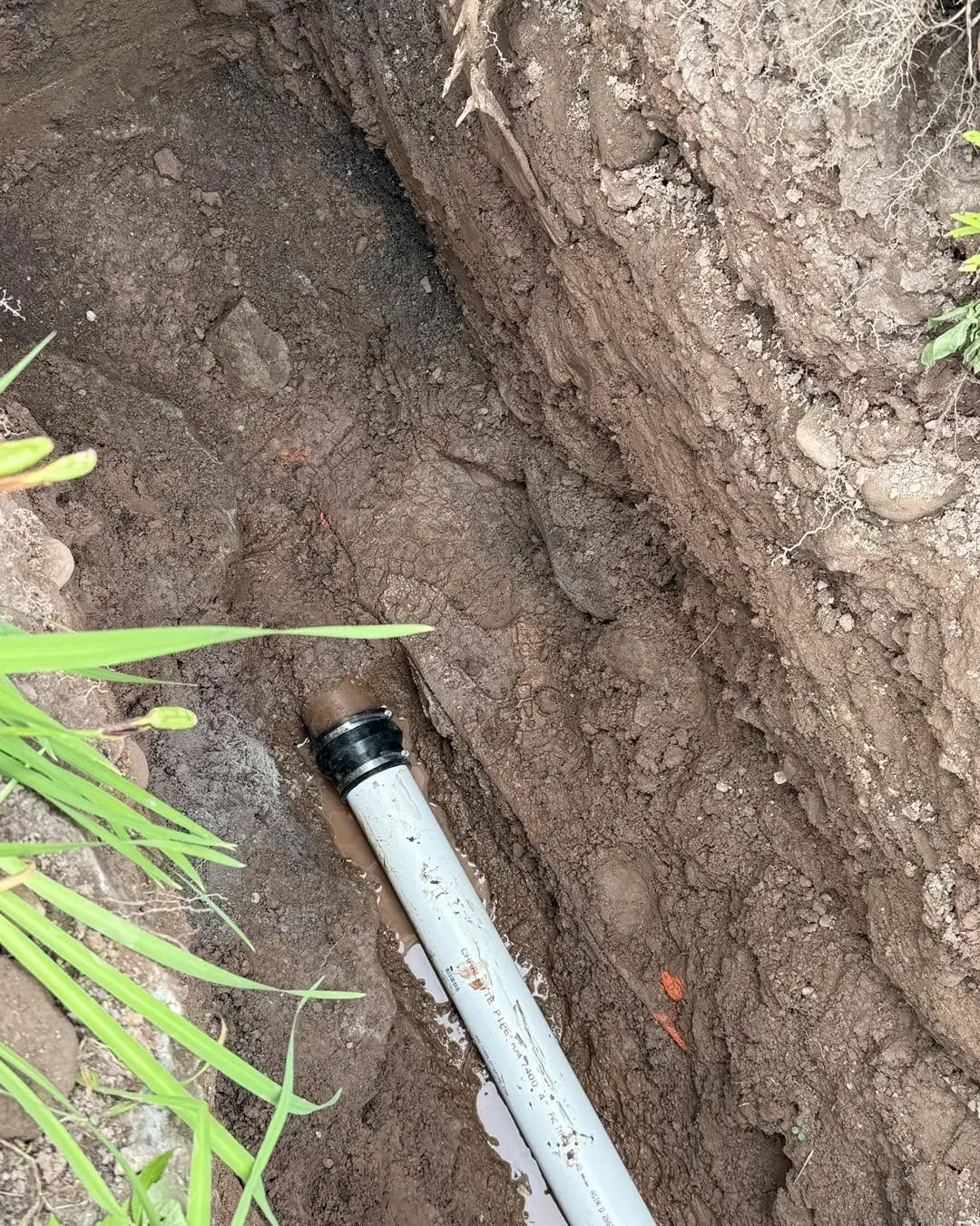
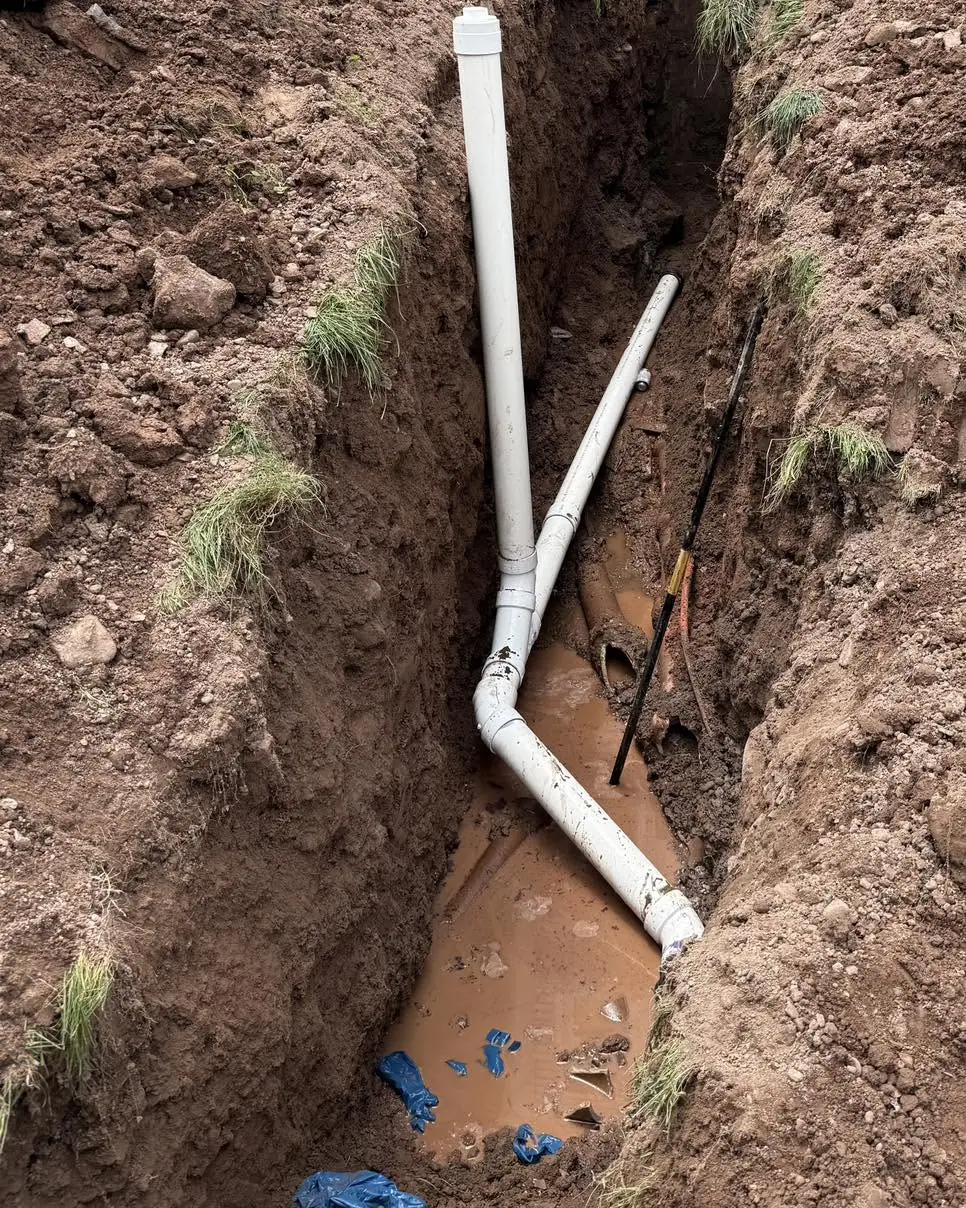
After a basement sewage backup, inspection, attempted augering and hydro jetting showed the existing sewer line had completely deteriorated. Following specialist cleanup and remediation, we opened approximately 130 feet of trench, through solid stone in sections, and replaced the sewer line. The homeowner also replaced the full water service while the trench was open.
A failed section of the existing sewer line was excavated and removed before approximately 40 feet of new PVC sewer piping was installed. The work included owner-operated Bobcat excavation, professional connections and a new cleanout for future access and serviceability.

We focus on main sewer and drain lines generally 3 inches and larger. Small kitchen, bathroom and sink branch drains are not currently scheduled. Send photos, your town and any camera footage you already have, and we will tell you whether the project fits.
A camera inspection shows breaks, collapsed sections and deterioration. If augering or hydro jetting only helps for a short time, the pipe itself may have failed. When replacement is the right fix, the written estimate spells out the scope.
Yes. Rock and difficult soil can materially affect equipment, schedule and cost, so conditions are evaluated and discussed as part of the project. Our Jessup project required trenching through solid stone in sections.
Requirements depend on the municipality, utility and project. Public utility marking and required approvals must be completed before excavation.
Backfill and restoration responsibilities vary by project. Your proposal identifies the agreed trench, surface and cleanup scope.
Often that makes sense, because one trench can serve both lines. In our Jessup project the homeowner chose to replace the full water service while the sewer trench was open.
We focus on main sewer and drain lines generally 3 inches and larger. Small kitchen, bathroom and sink branch drains are not currently scheduled.
Lackawanna and Luzerne Counties are our primary service area. Specialty projects may also be scheduled in Wayne, Pike, Wyoming, Carbon and Monroe Counties, subject to project scope and availability.
Text photos, the property location and any camera or utility information already available, or call the office.